%20Bold.png)
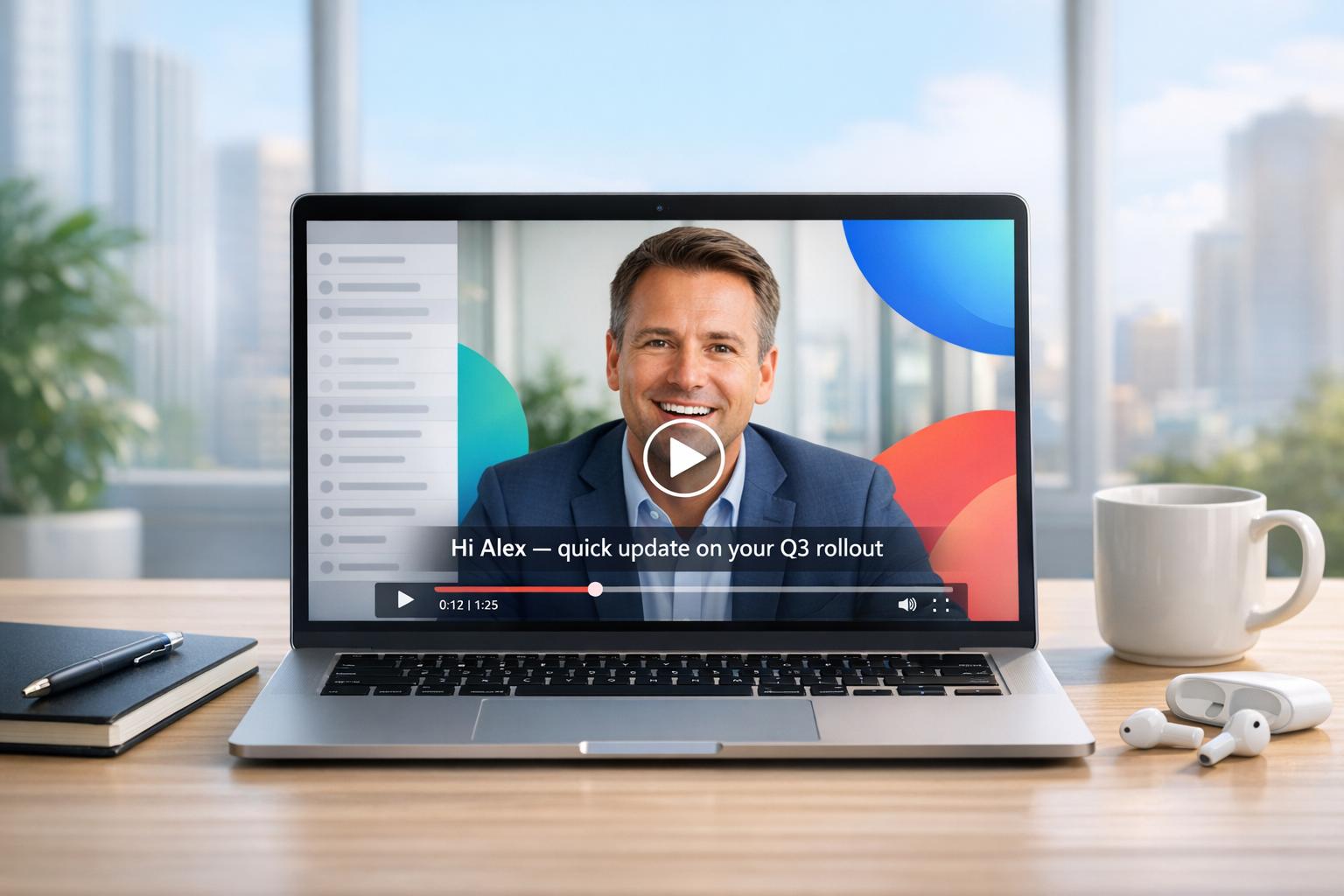
Personalized video is transforming B2B marketing. It boosts response rates by 85%, generates 16x more email opens, and can increase conversions by 500%. Using AI tools, businesses can create thousands of tailored videos without recording each one manually, making this strategy scalable and effective.
Personalized video is a proven method to stand out in crowded inboxes, build trust, and simplify complex ideas. Start with small, targeted campaigns and scale with AI tools for broader outreach.

Personalized Video Marketing Statistics and ROI for B2B
Personalized video cuts through the noise. Imagine opening an email and seeing your own website or LinkedIn profile featured within the first few seconds. That kind of recognition grabs attention immediately, showing that someone has taken the time to understand you and your business.
This approach works particularly well in industries like finance, consulting, and SaaS, where trust is crucial, and decisions carry significant risks. Seeing a real person on camera referencing specific insights about your company builds credibility in a way that generic emails simply can't. For example, sales reps who send personalized follow-up videos have seen response rates jump to 36%, compared to 19% for standard email follow-ups [3].
"The video itself isn't the product. Your insight about the prospect's specific situation is the product. The video is just the delivery mechanism." – Alex Berman [3]
Videos also make complex ideas easier to digest. Research shows that 59% of executives prefer watching a video over reading text [4], and personalized videos are 35% more likely to be watched all the way through [1][2]. Even better, personalized calls-to-action convert at rates 200% to 300% higher than generic ones [4][2]. For B2B companies dealing with deals over $15,000–$25,000, video becomes a game-changer, speeding up the sales process and reducing the manual legwork for sales teams.
Including personal touches, like a prospect's logo or website, makes a strong impression. It shows you've done your research and signals genuine interest in their business. In relationship-driven industries like consulting and finance, this can give you a major edge.
Simple techniques, like using a thumbnail of a sales rep holding a whiteboard with the prospect's name, can significantly boost click-through rates [3]. Real-world campaigns highlight how effective this approach can be. For instance, Cadbury's personalized gift campaign, which used Facebook profile photos and names in videos, achieved a 65% click-through rate [3]. Similarly, Nike's "Your Year" campaign created around 100,000 personalized animated videos using fitness app data, proving that these strategies work well in both B2C and B2B settings.
The numbers speak for themselves: personalized videos can increase email conversions by up to 500%. These videos present complex ideas in a concise, visually appealing way, helping prospects quickly understand your offering without wading through lengthy text.
This efficiency is critical in B2B sales, where decisions often involve multiple stakeholders. A personalized recap video can easily be shared among team members, keeping everyone aligned without additional meetings. For sales teams, the benefits are clear - personalized videos generate up to 16 times more opens and 4.5 times more clicks than generic video content [2][3]. By adopting a tiered approach - fully custom videos for high-value accounts and AI-assisted ones for broader outreach - you can ensure your efforts align with the potential return.
AI-powered personalization takes this strategy to the next level. With AI, one video can be adapted to include personalized elements like a prospect's website or LinkedIn profile, making it feel tailored to each recipient.
While creating one-to-one videos for every prospect isn’t practical at scale, AI tools streamline the process. Once set up, these tools can automatically generate personalized videos for large audiences. That said, context is key. Human-recorded intros still outperform AI avatars in reply rates, especially for high-value deals over $100K [4][3]. A hybrid approach works best: use AI-generated videos for high-volume outreach and switch to human-recorded content for more advanced stages of the sales process. This balance ensures scalability without losing the personal touch.
At Visora, we blend these personalized video techniques into our B2B marketing strategies, helping clients build stronger connections and close deals faster.
The type of video you choose should align with the potential value and scale of your outreach. For instance, go for fully custom videos for your top-tier accounts, use semi-personalized templates for mid-tier prospects, and rely on AI-assisted videos for broader audiences of 500 or more. The key is to balance personalization with the expected return.
These are highly tailored, manually recorded videos that directly reference specific details about your prospect - like their website, LinkedIn activity, or recent achievements. They show an unmatched level of effort, making them ideal for high-value enterprise deals or account-based marketing efforts.
For example, techniques like writing the prospect’s name on a whiteboard can spark nearly 100% curiosity clicks. While creating these videos takes around 5–7 minutes each, they’re well worth the investment for Tier 1 accounts where the deal size justifies the time spent.
AI-powered videos let you record one base video and personalize it for thousands of recipients. With modern AI tools, you can dynamically insert each prospect’s name into the video without resorting to robotic text-to-speech. Some tools even allow dynamic backgrounds, overlaying a prospect’s website or LinkedIn profile while you speak.
This approach works well for high-volume outreach, such as sales development representative (SDR) campaigns. Instead of spending 10–15 hours manually recording videos for 100 prospects, you can achieve similar results in under an hour. These videos typically deliver three times higher engagement in email and LinkedIn outreach. However, for deals exceeding $100K, human-recorded videos still tend to outperform AI-generated ones in terms of reply rates, as they create a stronger emotional connection.
These videos are automatically sent when a prospect takes a specific action, like visiting a pricing page or pausing during negotiations. Integrated with your CRM, they’re a seamless addition to lead nurturing workflows.
Trigger-based videos are particularly effective for re-engaging cold leads. For example, if a prospect hasn’t replied in two weeks, a video follow-up can reignite the conversation more effectively than another plain-text email. They’re also great for mid-funnel engagement, such as sending a personalized thank-you video after a webinar or whitepaper download, maintaining that personal touch when it matters most in the buyer’s journey.
These formats provide a solid framework for building impactful personalized video campaigns.
Launching a personalized video campaign requires a smart and scalable approach that balances effort with expected returns.
Start by defining your Ideal Customer Profiles (ICPs) using firmographic and technographic data. Then, map out the buying committee by identifying both decision-makers and end-users - each group often has different motivations.
The secret lies in spotting intent signals that can guide your outreach. Look for events like funding announcements, product launches, hiring surges, or even layoffs, as these can reveal growth challenges or cost concerns [3][5]. Additionally, dig into LinkedIn posts from prospects to uncover publicly shared pain points. A great example: In July 2023, Goibibo, a travel portal, sent personalized videos featuring cricketer Rishabh Pant to users who searched for trips but hadn’t booked. By mentioning each user’s specific destination, the campaign saw a 17% higher WhatsApp read rate and a noticeable increase in bookings [5].
To balance effort and ROI, use a tiered approach:
Also, verify your data using email validation tools to avoid wasting effort on invalid email addresses [4].
An efficient way to scale is by using a "record-and-stitch" method. Start with a 60-second product walkthrough or demo as your main video, then add a 20-second personalized introduction for each prospect. This keeps the process efficient while maintaining a personal touch where it counts.
For Tier 2 prospects, batch videos by industry to reuse research and messaging. If you're using AI voice cloning tools, placeholders like “Watermelon” for names can be replaced later with each prospect’s actual name.
For high-volume campaigns, tools like After Effects allow you to use templates connected to CSV files to automatically render thousands of personalized videos. Always include a strong call-to-action that matches the prospect’s stage in the buyer journey, whether they’re just learning about your product or ready to make a decision.
AI tools make one-to-one personalization possible even at scale. For instance, dynamic backgrounds can overlay a prospect’s LinkedIn profile or website in your video, grabbing attention in the first few seconds [3].
That said, for high-value deals, in-person recordings often outperform fully AI-generated videos. A compelling example: In 2023, Hero MotoCorp sent 2.4 million personalized videos during a festive season. Each video included the customer’s name and local dealership details, leading to a 10× increase in service-camp visits compared to non-personalized campaigns [5].
Next, we’ll explore how to maximize the reach of these videos across different channels.
Avoid attaching video files directly in emails. Instead, use clickable thumbnails - either static images or animated GIFs under 1 MB - that link to a landing page [3][4]. A clever trick is the “whiteboard” method: include an image of yourself holding a whiteboard with the prospect’s name on it to spark immediate curiosity. Adding a play button overlay to thumbnails can improve click-through rates by over 30% [4].
Incorporate video into your multi-channel strategy. For example, on LinkedIn, send a connection request followed by an automated personalized video message at the right stage of the buyer journey [3][4][5]. Often, sending the video as a follow-up - such as three or four days after an initial text-only email - creates a strong impact [3].
Use CRM triggers to automate video sends based on high-intent actions, like visiting a pricing page or downloading a whitepaper [5]. Each video should lead to a custom landing page that features the prospect’s name, company logo, and a tailored call-to-action [1][2].
Once your videos are live, testing is essential to fine-tune your approach. Start by A/B testing thumbnails - compare static images versus animated GIFs, experiment with text overlays, and try different play button designs. For instance, adding "video" to your email subject line can increase open rates by 19% [4].
Track metrics like view rates, watch time, and click-through rates, alongside conversion stats such as reply rates, meeting bookings, and pipeline growth. Personalized videos can achieve up to 16× more opens and 4.5× more clicks than generic ones [2][3]. Focus your efforts on high-value deals, as video outreach tends to be most cost-effective for deals with an average contract value (ACV) of $15,000 to $25,000+ [4]. For smaller deals, prioritize Tier 3 AI-assisted videos to minimize time investment. Analyze which personalization elements - such as referencing a recent LinkedIn post or addressing a specific pain point - drive the best engagement, and adjust your strategy accordingly.
Expanding on targeted email and direct messaging strategies, these tips will help ensure your personalized video content reaches the right people across various channels. The goal? To engage decision-makers and speed up your sales process.
Email is still the go-to channel for sharing B2B video content. But here's a golden rule: never attach the video file directly. Why? Sending raw files can trigger spam filters and exceed Gmail or Outlook's attachment limits (20-25 MB) [4][3]. Instead, use a clickable thumbnail - either a static image with a play button or a lightweight animated GIF (under 1 MB) - that links to a hosted landing page.
Static thumbnails with play buttons boost video clicks by 31.2%, while animated GIFs increase click-through rates by about 21% [4]. Even adding the word "video" to your email subject line can drive open rates up by 19% [4]. Keep in mind, older versions of Outlook (2007-2019) won't animate GIFs, so make sure the first frame communicates your most important message [4].
To grab attention, consider using visual hooks, like holding up a whiteboard with the recipient's name. This sparks curiosity and shows the video was made just for them [3]. On the landing page, include dynamic elements such as the prospect's name, company logo, and a tailored call-to-action (CTA). Personalized CTAs perform three times better than generic ones [2], so avoid cookie-cutter approaches.
Social media platforms, especially LinkedIn, can amplify your message and broaden your reach. LinkedIn works well as a "pattern interrupt" in your multi-channel strategy. Instead of starting with video, use it as a follow-up after your initial email [3]. Begin with a connection request, then send a personalized video message once connected.
LinkedIn is particularly effective for engaging busy decision-makers who might have missed your email. In fact, 59% of executives prefer watching a video over reading text [4]. When reaching out, reference shared connections, recent posts, or company updates to make your message feel personal and genuine.
Keep LinkedIn video messages short and sweet - 30 to 90 seconds is the sweet spot. 71% of professionals agree that videos between 30 seconds and 2 minutes work best for B2B outreach [3]. Use LinkedIn's native video messaging feature for a seamless experience, as external links may reduce engagement. For Tier 1 accounts where you've already built trust, platforms like WhatsApp or Telegram can provide even more direct and high-touch communication [1].
Timing is critical when distributing video content. Instead of sending videos randomly, use behavioral triggers to deliver them when prospects are most engaged. For example, set up automated workflows in your CRM to send personalized videos based on specific actions, like visiting your pricing page, downloading a whitepaper, attending a webinar, or spending significant time on your site [7].
A great example of this approach is CloudApp. Their personalized video outreach resulted in a 37% increase in email open rates, a 75% boost in click-through rates, and a 20% faster sales cycle [7]. The secret? They sent videos triggered by high-intent behaviors rather than relying on fixed schedules.
You can also use external signals, like funding announcements, product launches, or hiring sprees, to time your outreach [3]. For instance, if a prospect just secured Series B funding, they’re likely focused on scaling, making it a great time to share how your solution can help. Similarly, if someone downloads a resource from your site, follow up with a video within 24 hours while your brand is still fresh in their mind.
Finally, consider delivery timing and the recipient’s device. Mobile users prefer shorter videos with larger text overlays, while desktop viewers can handle more detailed walkthroughs [6][7]. By aligning your video delivery with behavioral patterns and intent signals, you increase the chances of catching prospects at the right moment. These well-timed triggers can seamlessly integrate into your broader multi-channel strategy, helping you measure performance and refine results.
Once your personalized video campaign is live, tracking its performance is essential. The right metrics don’t just show how many people watched your video - they reveal how well it’s driving your business goals. Instead of focusing on superficial stats like total views, look for numbers that directly impact outcomes.
Metrics like watch time and completion rates help you understand if viewers are truly connecting with your content. While view counts can show how far your reach extends, they don’t tell the full story. For example, YouTube considers a view after 30 seconds, but TikTok counts them almost instantly [10]. Dig into retention curves to see where viewers drop off. If you notice a pattern - like viewers leaving around the two-minute mark - you’ll know to tighten up future videos [10].
Another key metric is click-through rate (CTR), which measures how well your call-to-action is driving the next step. Personalized videos can increase clicks by up to 4.5 times [3]. To improve CTR, experiment with thumbnails. A thumbnail featuring a person’s face or a whiteboard with the viewer’s name can spark curiosity and encourage clicks [3].
These engagement metrics lay the groundwork for assessing how well your videos convert.
Conversion metrics reveal how effectively your videos turn engagement into action. For example, response and reply rates show how well your videos nurture leads. To track this, monitor actions like meeting bookings, demo requests, or movement through the sales funnel. Use unique URLs or landing pages to capture these interactions [8][1].
Another critical measure is pipeline acceleration, which reflects how videos help speed up the sales process. Teams that integrate video into their strategy often see sales cycles shrink by 30–40% [9]. Additionally, video adoption correlates with a 25–40% rise in win rates for top-performing teams [9].
Your engagement and conversion data provide a roadmap for refining your approach. Use A/B testing to experiment with elements like thumbnails, video length, and messaging to boost performance [8]. For instance, test static thumbnails with play buttons against animated GIFs, or compare shorter videos (under 60 seconds) with slightly longer ones (closer to two minutes). Let the data guide your decisions.
Avoid relying only on first-touch attribution. B2B buyers often watch 5–7 videos before taking action [9]. A W-shaped attribution model - where 30% of credit goes to the first touch, lead creation, and opportunity creation - can give you a more accurate picture [9]. Lastly, track operational ROI by measuring the time saved in sales demos, reductions in support tickets, or faster employee onboarding. These are clear indicators of how video improves efficiency [9][10].
Personalized video has become a core strategy in modern outreach, delivering impressive results like 16x more opens, 4.5x more clicks, and an 85% boost in response rates [1][2][3]. It’s a game-changer for cutting through crowded inboxes and building real connections.
To strike a balance between authenticity and scalability, use fully custom videos for high-value accounts, while leveraging AI-powered tools for mid-tier prospects. Keep your videos short - around 45–60 seconds - and kick things off with a strong visual hook, like referencing the prospect’s website. Wrap it up with a single, clear call-to-action [3].
For success, don’t treat personalized video as a one-off tactic. Instead, weave it into a broader multi-channel strategy. Combine video with email, LinkedIn, and intent-based triggers to create a cohesive outreach plan. Track key metrics like watch time, click-through rates, and pipeline acceleration to refine your approach over time. This integration of video with other channels can drive meaningful results and fuel revenue growth.
B2B leaders looking to accelerate sales cycles and tap into high-value relationships can benefit from Visora's targeted multi-channel strategies. By blending personalized outbound efforts with AI acquisition systems and market intelligence, Visora helps access top-tier opportunities without relying on referrals, heavy ad spending, or large teams. Learn how to build a revenue-driving video strategy with Visora’s advisory services at https://visora.co.
Custom videos are ideal for engaging high-value targets, offering personalized content that helps establish trust. AI-driven videos take personalization to the next level by leveraging data to craft messages suited for larger audiences, making them perfect for scaling outreach. Trigger-based videos are automated and sent based on specific user actions, ensuring timely and relevant follow-ups. Use custom videos for important accounts, AI-driven videos for broader campaigns, and trigger-based videos for behavior-specific interactions.
To create personalized videos at scale for B2B marketing, start with accurate contact details (like email addresses) and relevant business insights such as the company's name, industry, and specific challenges. Use resources like LinkedIn or company websites to gather information on recent activities or achievements. Keeping your data accurate and current is essential for ensuring both deliverability and meaningful engagement. Reliable data forms the foundation for scalable and effective personalization.
To truly gauge ROI beyond just opens and views, shift your attention to engagement metrics like click-through rates, response rates, and conversion rates. On top of that, monitor how these videos influence key business outcomes, such as meeting bookings or reductions in customer acquisition costs. These data points offer a more detailed look at how personalized video content contributes to your business's success.
%20(5).png)
